

Water |
|
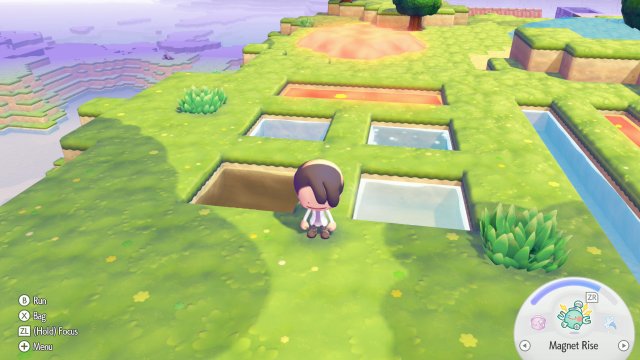
Water is one of the fundamental elements of each location. Not only does it provide an aesthetic, it has many uses such as hydrating the nearby area for plants. There are five different kinds of water in the game, each with their own unique features. While there's natural water in each area, you also have the ability to generate your own water after completing Piplup's request with Paldean Wooper in Bleak Beacj by using a variety of drinks obtained at vending machines. Each drink gives a different kind of water and you get an infinite amount of spit outs of the water to create the flow that you desire. You can hold ZL to adjust the height of the placement of the water, but it will need to be attached to something to start such as being next to a block or another bit of water. You can also suck up water after this request. Hold Y to suck in and press ZR and it will suck in any nearby water, sometimes even removing it. If a plant is submerged, it will no longer grow while under water. Fire will also be put out. Any water placed near other water that would flow after it replaces the water. For example if you put Ocean Water on a cliff above Fresh Water, it will overwrite some of the Fresh Water. If you then remove the Fresh Water, it will then take the area for the Ocean Water. However, you cannot directly overwrite water sources with any other water. |
 |
List of types of Water
| Picture | Name | Description | Item |
 | Water | Standard water. Allows for Sparkling Ripples to appear |  Fresh Water |
 | Ocean Water | Sparkling sea water. Ripples cannot appear here |  Soda Pop |
 | Muddy Water | Muddy water. Ripples cannot appear here Does not hydrate the area |  Moomoo Milk Coffee |
 | Hot Spring Water | Hot water. Pokémon may enter pools of this to relax. Ripples cannot appear here | 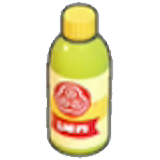 Roserade Tea |
 | Lava | Lava. Does not hydrate the area. Damages Ditto if touched Use Water Gun on the Lava to turn it into Black Rock | 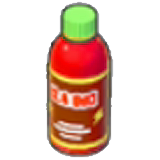 Chili Sauce |
Generating Water |
|
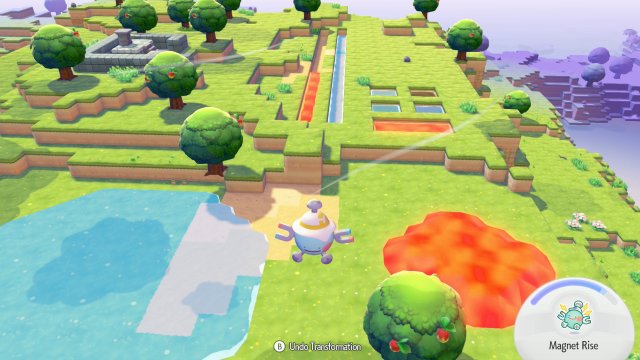
When you place water down, its movement is decided in a very unique way. If the entire area around it is flat with no drops or walls nearby nearby, then it will spread out in a puddle leading out in a circle in 6 tile directions. Lava has different properties to water, however, and goes half the distance and move a lot slower, but it has different properties entirely when going towards cliffs. 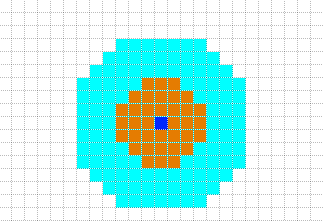 However, if the water is funnelled with some walls, the distance it can go from one drop of water is basically 25 blocks along a trench, or 12 blocks for Lava. However, for each side that it goes off, it will decrease in length by two until it's around a 6x6 area. It can also go through small diagonal gaps when there is a diagonal gap between two bricks, meaning it can flow in all 8 directions as long as the adjacent tile is a gap off the same level as it All of this comes off from the specific water source. There are two different kinds of Water Sources |
 |
Water along cliffs |
|
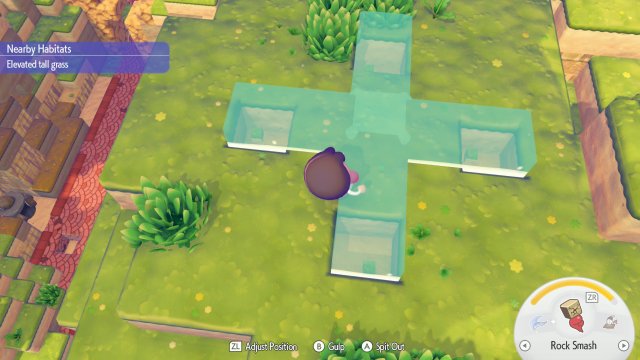
There is something that changes how water flows however, and that's a drop. If you place a water source within 4 spaces of a cliff, or a drop of any sort, rather than the water spreading out as it does on a flat surface, the water will instead go towards that drop. Even if the drop is not directly within but requires going over four spaces to get to, it will do that and take two blocks width to hit it. This causes a complete straight line with the water and it will not spread out 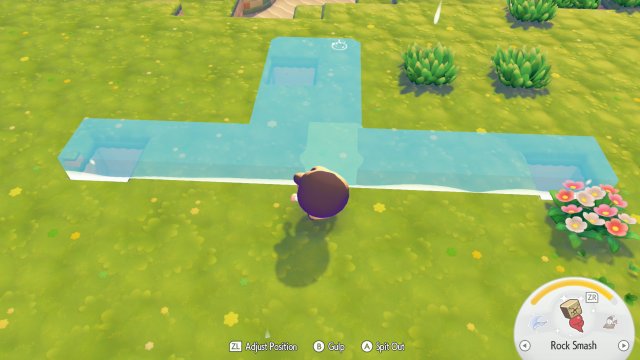 If there are multiple different drops equidistant to the water source, then it will go to all of the drops at the same time. As the water drops, it will continue to spread out like all sources until it hits the final flat area and spreads out as far as it can. |
 |
Lava along cliffs |
|
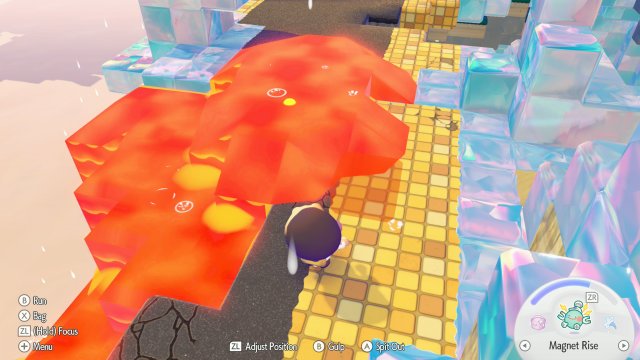
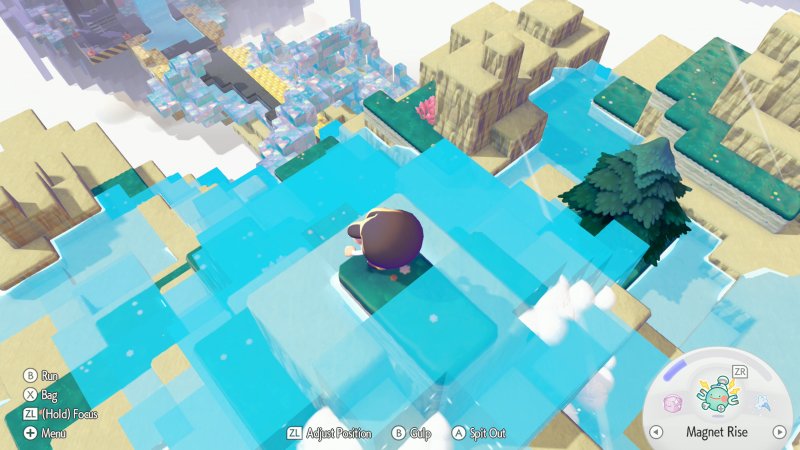
Lava reacts a little differently than normal water in this regard. Instead of just beelining in a straight line towards the drop, it will start to go to the drop, but then on the second tile, it will start to spread out again as it heads out to the cliff creating a small puddle like the ones it normally would. This puddle doesn't wrap back round to behind the primary source Due to this, on areas where there's higher concentration of drops, rather than just go for the nearest cliff, as it spreads out following the first tile, it will potentially hit even more drops and surface area despite Lava having a shorter reach as standard. The below examples show a comparison of the area in Sparkling Skylands after several water and lava sources are created alongside the peak as seen below. This showcases the different lengths that water will go |
 |

| Water Start Point | Lava Start Point |
 |
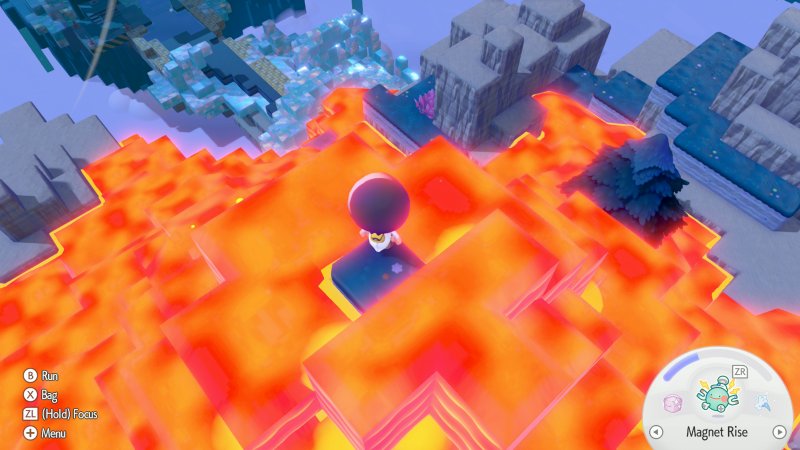 |
| Water Final Coverage | Lava Final Coverage |
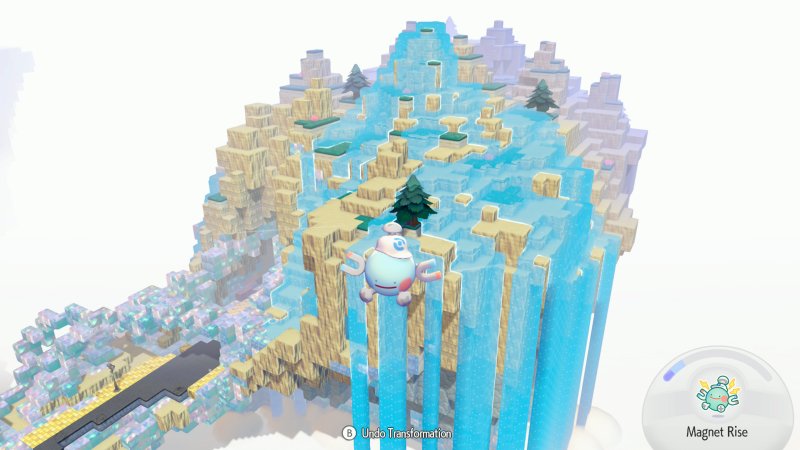 |
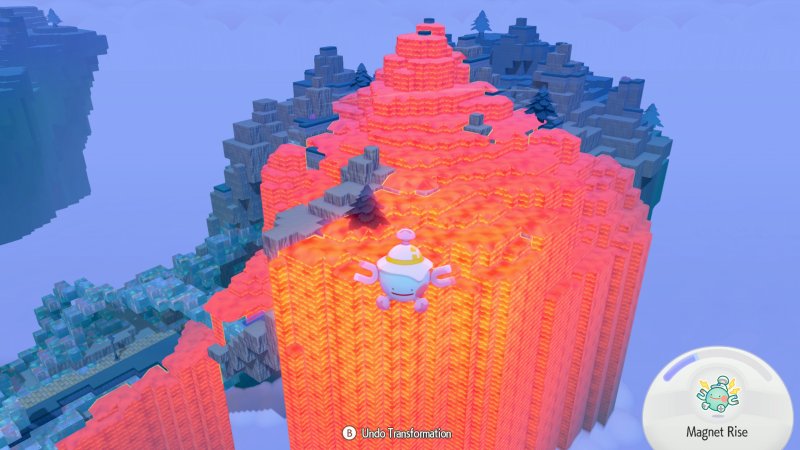 |
Water Levels |
|
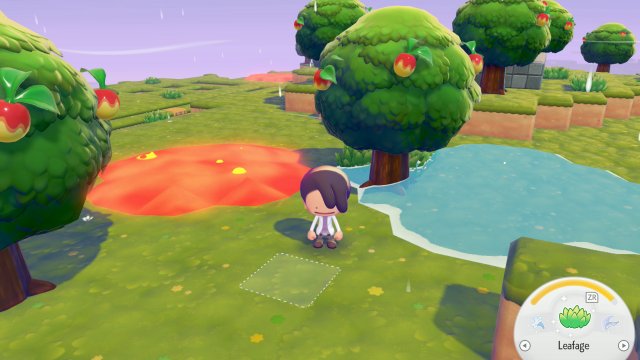
There is a small element which changes how this works as well, the Water Levels. When you have water in your mouth, if you hold down ZL you can then adjust the water level between the standard, and low level. This will adjust the height the water takes in the block and comes with a few changes from how water normally works. First, when you drop down the water and lava, it will take up half the amount of space. This means the puddle for water will only be in a circle 7 blocks wide, or for Lava it will only be 5 blocks wide. When going through a trench, the furthest distance it will go is 12 blocks for water and 6 for lava. In addition to that, water with a low water level will never aim for the nearest cliff. Instead, no matter how close it is to an edge, it will spread out in a circle, hitting the cliff and continuing down. All secondary sources at the bottom of each drop will also have this low water level and low distance. |
 |